How a green roof at Swansea music venue The Bunkhouse is exploring new ways to reuse local waste, support biodiversity and create more climate-resilient places.
What if something we usually throw away could help make our towns and cities greener?
That’s the thinking behind an innovative green roof project at The Bunkhouse, a popular independent music venue in Swansea, where waste cockleshells from Penclawdd are being put to a surprising new use.
As our towns and cities 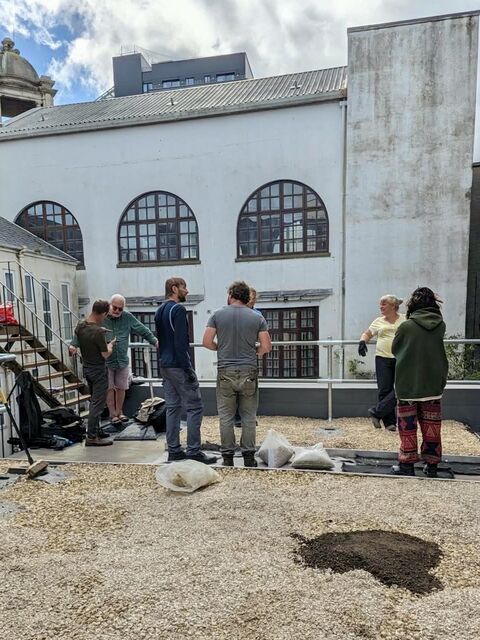 experience hotter temperatures and heavier rainfall, green infrastructure is becoming an increasingly important part of how we create healthier, more resilient places.
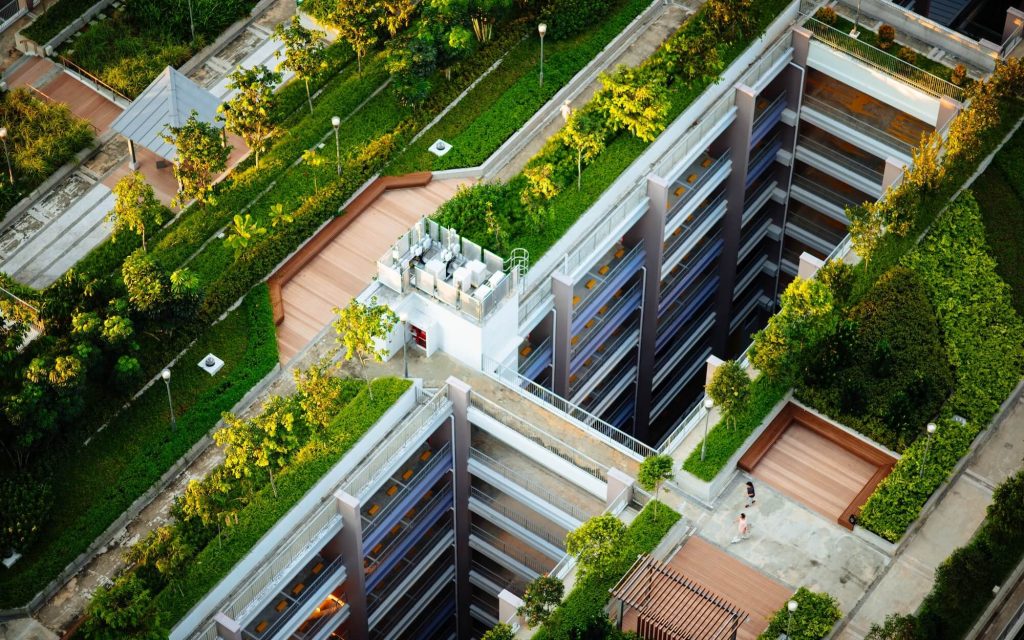
Green roofs are one way of responding to these challenges. By introducing vegetation onto buildings, they can help absorb rainwater, reduce temperatures and create valuable habitats for wildlife.
Turning Local Waste into New Opportunities
Working with green roof specialists Chris Bridgman and Dusty Gedge, we brought together people who had previously completed green roof training with Urban Foundry to help install a new green roof at The Bunkhouse.
But this isn’t just a conventional green roof.
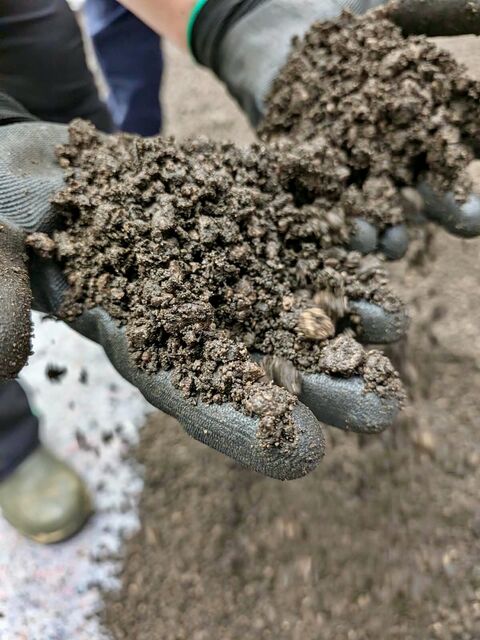
Most green roofs use a growing medium, known as a substrate, often made from crushed brick. This project is exploring whether locally sourced waste materials could provide a more sustainable alternative.
And in Swansea, we have a particularly interesting resource right on our doorstep.
Penclawdd’s cockle industry produces waste shells that could potentially be repurposed as a growing medium for green roofs.
Chris and Dusty are testing the use of these cockleshells as part of the installation, exploring how a local waste product could support greener urban spaces.
Small Changes, Bigger Possibilities
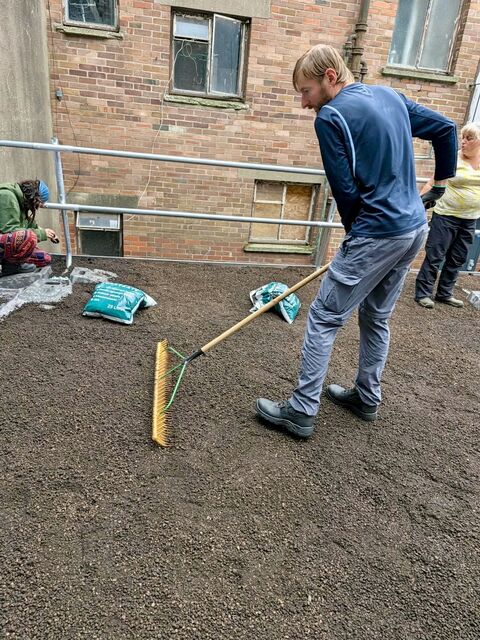 It’s a practical example of the circular economy in action, finding new value in materials that would otherwise go to waste.
By exploring how locally available resources can be reused, projects like this could help reduce reliance on conventional materials while supporting biodiversity and helping our towns and cities adapt to a changing climate.
And while this particular project is rooted in Swansea, the learning could have much wider applications.
At Urban Foundry, we’re interested in finding practical, creative ways to make places work better for people and the environment.
This project brings those ambitions together, connecting local knowledge, specialist expertise and hands-on learning to test new approaches to sustainable regeneration.
The project was funded and supported by Natural Resources Wales, Welsh Government and Swansea Council.
Special thanks to Chris Bridgman, Dusty Gedge, Kate McCabe, Penny Gruffydd and Fran Rolfe for their contributions.